In Ovid's Metamorphoses human transformations into other beings might be caused by the fury of a god, as a vengeful punishment for a human weakness or virtue.
In Under the Walnut Tree, my novel, human transformation is not the consequence of a god's fury but of a human conflict and a desire for a different vital experience.
As old as human wondering, human transformation into an animal has been a fantastic dream, an expression of the human mind and its conflicts with itself and reality.
Animals are mysterious creatures and a constant reminder of our own unfathomable nature.
Monday, May 20, 2019
Monday, July 23, 2018
A call for attention
Tuesday, January 23, 2018
The Ocean

"El anhelo del océano es omnipresente en el libro" writes a reader, referring to the omnipresence of the sea as an emotional attraction in the Under the Walnut Tree. In effect, in the novel the ocean plays an important role as a spatial element and as a symbolic presence in the world of the protagonist.
Saturday, March 25, 2017
The Begining
Under the Walnut Tree, the novel I wrote a few years ago and was published by MediaIsla in September 2013, is narrated in the fist person by the protagonist, Ari, a boy of undisclosed age.
The first page of the narrative gives a first glimpse into the character's personality and points to the nature of the story that is going to be told by him to no one in particular.
Here are some lines of the first chapter, titled "The End of Summer."
"Sitting there in class I felt like a caged animal. The wild, solitary beast I had imagined to be when playing alone in the woods all summer, had been trapped, cornered to submission by the rules of men. The teacher’s voice was a far away drone, something of a hypnotic spell calling me to sink back in my melancholic daydreaming. I couldn’t avoid looking out of the window to the wooded hills that rolled all the way beyond my sight into my Granddad’s land and the knoll where the black walnut tree, standing tall and imposing, was murmuring in the wind its ancient stories. The ones I had been enjoying all summer long as I spent hours of solitary wondering under its protective shade. Granddad had taught me to go there when in trouble with myself and let the mystery of my childish worries be absorbed by the quiet magnificence of the whispering tree and the surrounding landscape it commanded. Reclining on its bole many an evening I had learned to love the land of my ancestors, with its meandering rives and its hills that in successive increasing waves of green climbed to the coastal mountain range from the ample arch of the beach and dunes."
The first page of the narrative gives a first glimpse into the character's personality and points to the nature of the story that is going to be told by him to no one in particular.
Here are some lines of the first chapter, titled "The End of Summer."
"Sitting there in class I felt like a caged animal. The wild, solitary beast I had imagined to be when playing alone in the woods all summer, had been trapped, cornered to submission by the rules of men. The teacher’s voice was a far away drone, something of a hypnotic spell calling me to sink back in my melancholic daydreaming. I couldn’t avoid looking out of the window to the wooded hills that rolled all the way beyond my sight into my Granddad’s land and the knoll where the black walnut tree, standing tall and imposing, was murmuring in the wind its ancient stories. The ones I had been enjoying all summer long as I spent hours of solitary wondering under its protective shade. Granddad had taught me to go there when in trouble with myself and let the mystery of my childish worries be absorbed by the quiet magnificence of the whispering tree and the surrounding landscape it commanded. Reclining on its bole many an evening I had learned to love the land of my ancestors, with its meandering rives and its hills that in successive increasing waves of green climbed to the coastal mountain range from the ample arch of the beach and dunes."
Wednesday, March 22, 2017
Reality and imagination
If in literature you are looking for a mirror of reality--and a truly clear mirror--do not read my Under the Walnut Tree, a novel that looks at reality through the looking-glass of fantasy.
Reality is reflected in landscapes, characters and actions and also in a world that includes in it the realm of imagination, the fabulous side of reality.
Monday, January 16, 2017
Good commentary
I suppose every writer hopes to have readers, people who will take the time to go page after page unraveling the mystery of language and its ability to communicate in reading what was created in writing.
Like a music score in front of the interpreter, the literary text waits for the reader to play its melody and recreate with it the world of concepts, actions and emotions, impressions and images every literary work composes with only words, the words of our everyday language.
Good interpreters, enthusiastic readers are what every writer hopes to have. Few are the ones who know of their readers or hear from them; none can be sure that someone has not only read, but enjoyed the experience as a personal enrichment, as an added wonder to their lives.
I should consider myself lucky to have received the following comment from someone who actually took my Under the Walnut Tree and for a few hours revived on her own mind the characters and their actions and desires. Someone who belonged for a short while to the world of my fantasy.
"I really enjoyed your novel--wrote this reader--, and have talked to NN, who was at your book reading the same evening I attended and we had a nice discussion over your novel. Have you started at least thinking of your second novel?… I sure hope so."
Like a music score in front of the interpreter, the literary text waits for the reader to play its melody and recreate with it the world of concepts, actions and emotions, impressions and images every literary work composes with only words, the words of our everyday language.
Good interpreters, enthusiastic readers are what every writer hopes to have. Few are the ones who know of their readers or hear from them; none can be sure that someone has not only read, but enjoyed the experience as a personal enrichment, as an added wonder to their lives.
I should consider myself lucky to have received the following comment from someone who actually took my Under the Walnut Tree and for a few hours revived on her own mind the characters and their actions and desires. Someone who belonged for a short while to the world of my fantasy.
"I really enjoyed your novel--wrote this reader--, and have talked to NN, who was at your book reading the same evening I attended and we had a nice discussion over your novel. Have you started at least thinking of your second novel?… I sure hope so."
Monday, January 9, 2017
Hopeful Fantasy
Monday, January 2, 2017
A Novel of Youth
I wrote it a year or so before as an exercise in evocation of an age most people remember as much better than what it was: the fleeting age of early youth.
In the novel reality is reproduced slightly differently as our everyday reality. The fictional characters, actions and places are more than representations of reality, the figurations of fantasy, as memory of the past has also transformed what it was in a dreamlike world of an ideal age, untouched by time.
In this, the novel follows a long tradition of narratives of youth.
Sunday, September 11, 2016
A form of decency
Although in my novel one could read a negative, escapist view of humankind into a fantasized ideal world of nature and its creatures, deep down I find impossible to deny the value of the human species as a highly evolved animal whose self consciousness might work against its own desire of perfection.
Humanity might be to many condemn to a bleak future as no answer seems available to solve the question of the imperiled collective future.
Fantasy is not an answer, although it provides a symbolic representation of a better world. A world in which naturally decent, purer beings live in harmony with nature and themselves.
The following quote from Cultural Amnesia, a book by Clive James, seems an appropriate approach to the problem:
"The only answer comes from faith: faith that the rule of decency--which at last, and against all the odds, looks as if it might prevail--began in humanism, and can't long continue without it." (851)
Humanity might be to many condemn to a bleak future as no answer seems available to solve the question of the imperiled collective future.
Fantasy is not an answer, although it provides a symbolic representation of a better world. A world in which naturally decent, purer beings live in harmony with nature and themselves.
The following quote from Cultural Amnesia, a book by Clive James, seems an appropriate approach to the problem:
"The only answer comes from faith: faith that the rule of decency--which at last, and against all the odds, looks as if it might prevail--began in humanism, and can't long continue without it." (851)
Tuesday, August 2, 2016
A Poem
UNDER THE WALNUT TREE
When I face what has left my life,
I bow. I walk outside into the cold,
rain nesting in my hair.
All the houses near me
have their lights on. Somewhere,
there is a deep listening.
I stand in the dark for a long time
under the walnut tree, unable
to tell anyone, not even the night,
what I know. I feel the darkness
rush towards me, and I open my arms.
rain nesting in my hair.
All the houses near me
have their lights on. Somewhere,
there is a deep listening.
I stand in the dark for a long time
under the walnut tree, unable
to tell anyone, not even the night,
what I know. I feel the darkness
rush towards me, and I open my arms.
Tuesday, May 24, 2016
Three Years Ago

Three years ago my novel Under the Walnut Tree was published by MediaIsla. As shown in this announcement, on Friday, November 15, 2013 I presented it to the public. On that occasion I was glad to see a rather numerous public attending who enjoyed the passages I read from the book fresh from the presses.
Thank you to those who came to celebrate my having completed a novel, and to all those who have taken some time to read it.
Three years after having been published the novel is not a novelty anymore, but it is still new for those who have not read it yet. I will be new forever as an ebook always available for a first reading.
Tuesday, May 12, 2015
The Powers of Language
Thursday, November 20, 2014
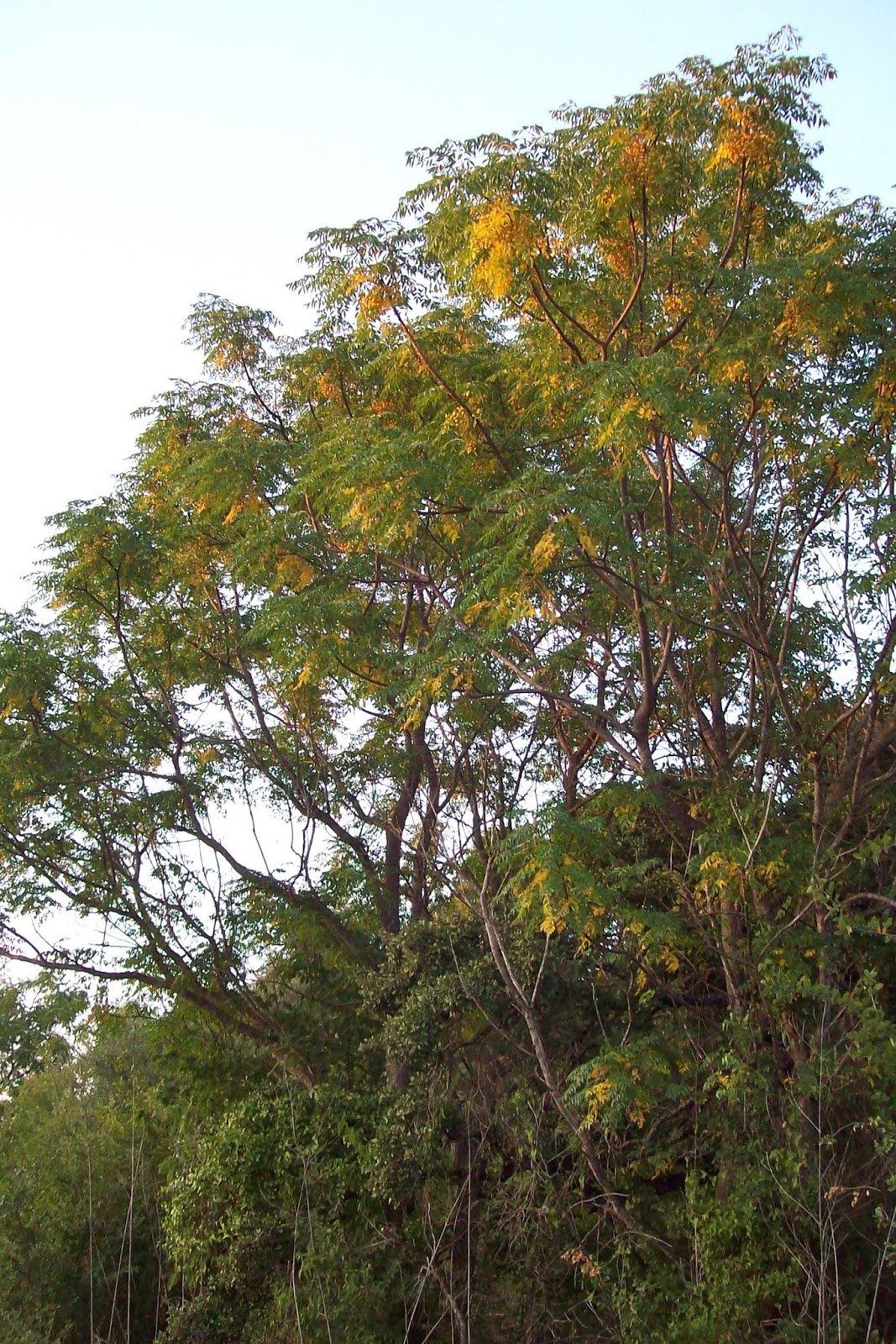
The Walnut Tree
What makes trees
exude the magical powers we attribute to them?
The symbolic walnut tree has an important presence in my novel,
Under the Walnut Tree,
now available as an e-book at Amazon .
Wednesday, November 19, 2014
Electronic Version of "Under the Walnut Tree"
Mi novel, Under the Walnut Tree is now available in electronic version at the following link: http://www.amazon.com/Under-Walnut-Tree-S-D-Tolson-ebook/dp/B00M77WXNG/ref=sr_1_1?s=books&ie=UTF8&qid=1416424274&sr=1-1&keywords=s.+d.+tolson
Thursday, July 31, 2014
The Beauty of the Beast
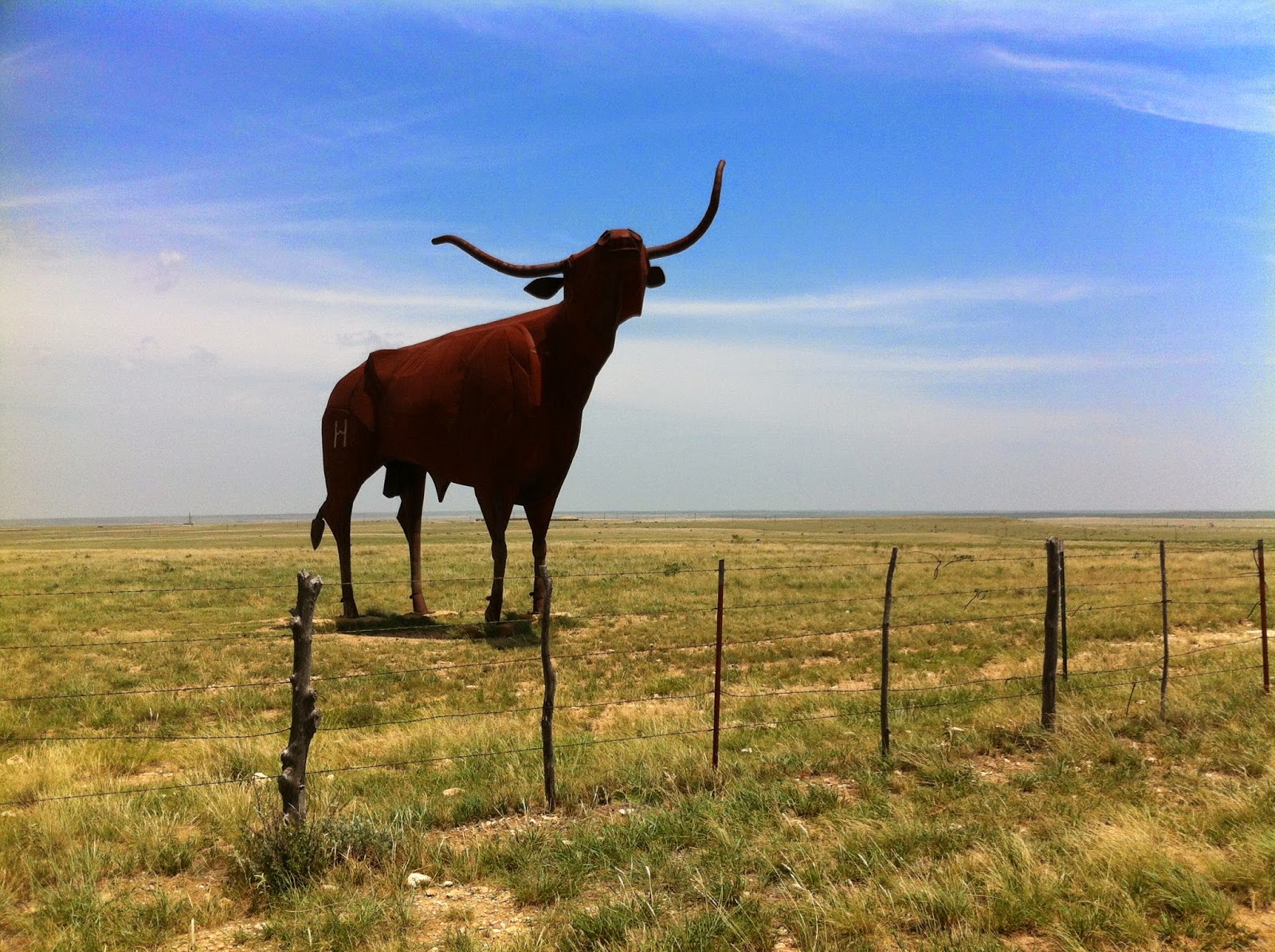
¿No es acaso esta escultura colosal en hierro más hermosa que el animal vivo que la inspiró?
Isn´t this colossal iron sculpture more beautiful than the live animal that inspired it?
Monday, July 21, 2014
El arte de callar
Hay días
cuando la pluma no fluye: se niega a escribir. No quiere escribir lo que
torpemente le dicto. Hace bien. Debo agradecerle su rebeldía porque lo hace por
mi bien, porque sabe, mejor que yo, lo que me conviene: callar. Le hago caso: dejo,
entonces, pluma y libreta sobre la mesa de escribir y salgo a caminar por el
barrio, a sudar venenos.
Wednesday, July 9, 2014
Reading and Book Signing
READING & BOOK SIGNING
TUESDAY, JULY 22
6:30 - 8:30PM
CENTRAL LIBRARY
600 SOLEDAD, 78205
Born and raised in Chile, UTSA professor and poet Dr. Santiago Daydi-Tolson,author of Under the Walnut Tree, will read from his works and discuss thedifferences between writing in Spanish and writing in English. Copies of the book will be available for sale.
Thursday, December 19, 2013
Writing and Reading
Once a novel has been written and published it exists as a final product, an
object to be handled by other hands and other minds than those of the writer
for whom the book as object appears surprisingly material.
It is not until others begin reading
the story encoded in the written pages of the book that the object ceases to be
a simple thing and becomes an experience, a human, personal and very individual
experience.
The author can only hope that the
readers may have as much pleasure and gain as much insight on the human spirit
as those gained and enjoyed in the
process of putting down in words the imagined story.
The characters, in turn, revive with
every reader.
Hope many resurrect Ari and his
friends and relatives from the pages of Under
the Walnut Tree.
Subscribe to:
Posts (Atom)